A Simple Introduction to BDD Part 1

Table of Contents

A Simple Introduction to BDD Part 1

Today marks the premiere of my screencast, which is essentially my initial foray into video blogging and sharing insights in this format.

The first topic to tackle is Behaviour-Driven Development and JBehave. This tool helps organize the process, offering a clear path from requirements to implementation. The main concepts include User Stories, Acceptance Tests, Test-Driven Development, and JBehave. There will be a total of five videos, with the first two available now!

Make sure to watch in 720p resolution and full screen.

(Text translated and moved from original old blog automatically by AI. May contain inaccuracies.)

Related Posts

Flex Workflows: Automate Knowledge Processes with AI

Flex Workflows: Automate Knowledge Processes with AI

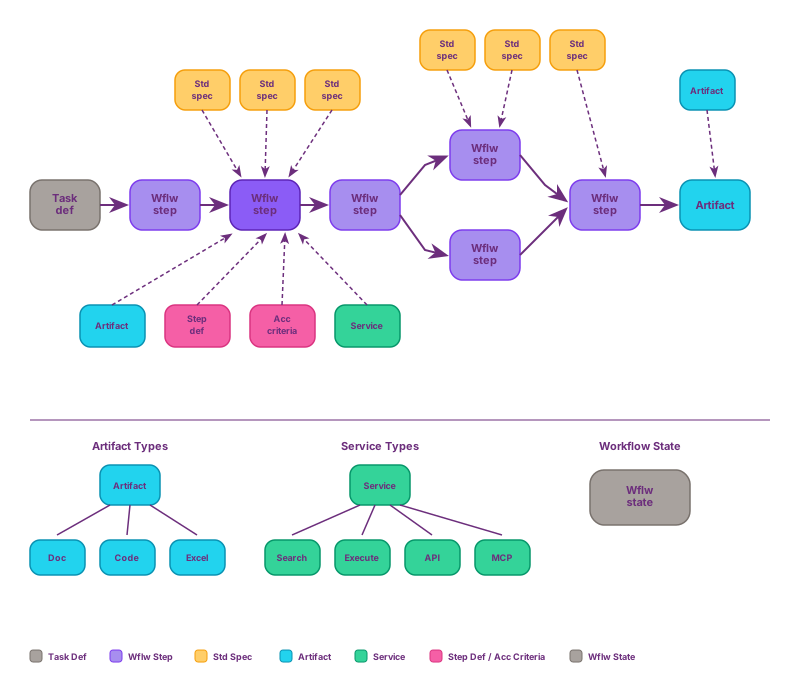
Traditional approaches struggle with complex automation. Flex Workflows provides a framework where specifications, standards, artifacts, and services guide AI agents through complex workflows, producing consistent, high-quality results at scale.

Read More

Effective Understanding of a Topic

This time, the topic slightly ventures beyond IT projects. Recently, I’ve been doing a lot of research work where I need to construct a coherent extract of practical information from a multitude of knowledge sources. After extensive work in this area, I’d like to share a few tips that I’ve had the chance to apply multiple times.

Read More

Why Agile Fails

Introduction

Implementing a methodology from the Agile family is not at all easy. The problem usually lies in management, who upon superficially understanding what it’s all about, perceive the new method as a promise that from now on, everything will magically work better. It doesn’t matter if we have subpar team members and adhere to the principle that “any specialist can be replaced by a finite number of students.” It doesn’t matter if there’s complete disregard for knowledge management and skill development in the team because there’s never time for that. It doesn’t matter if people working on projects are shuffled between projects—after all, it’s about interdisciplinarity, and everyone should know everything.

Read More